

The Story of Food Begins Before the Table
When we think about a delicious meal, we usually picture fresh ingredients, careful preparation and the people gathered around the table. Yet for foods that come from livestock, an important part of the story begins much earlier: with the animals’ daily feed.
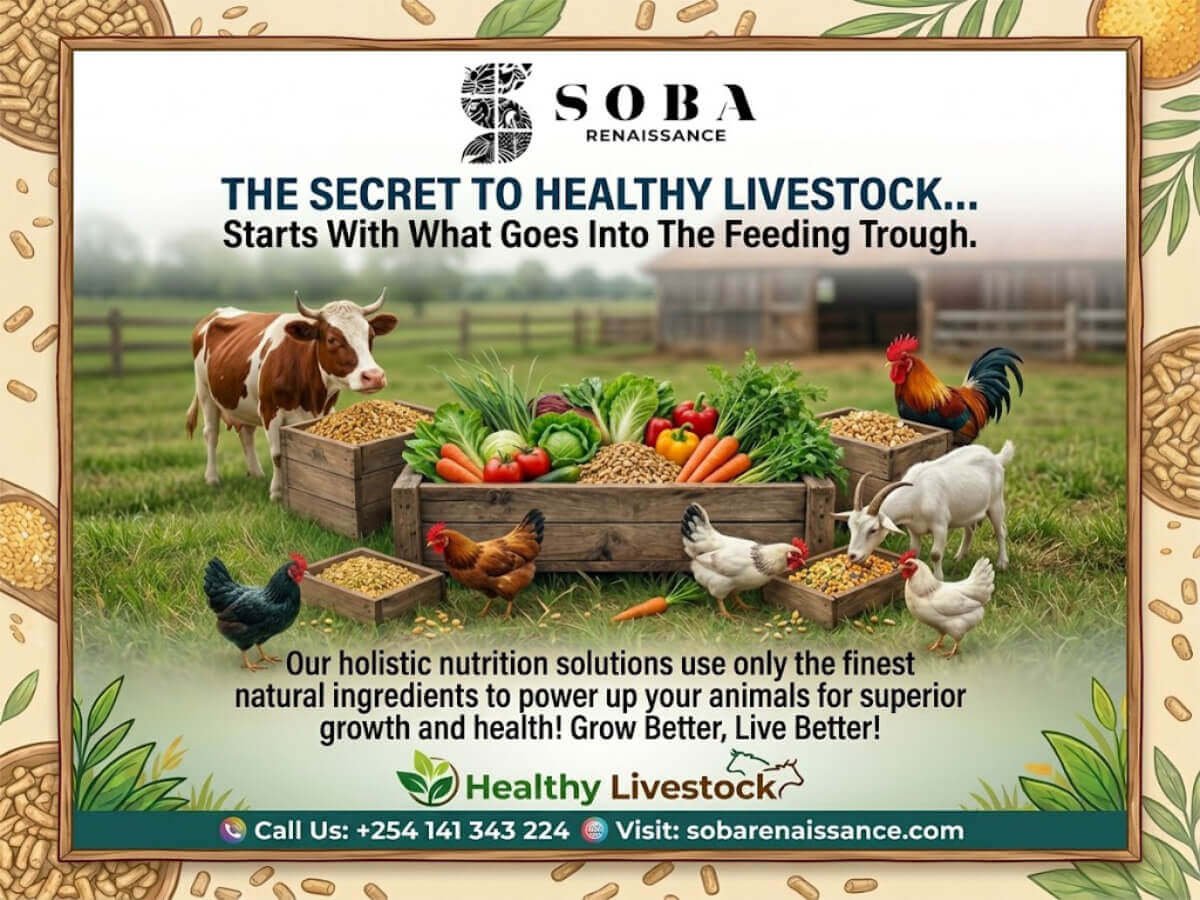
Feed is not merely something placed in a trough. It is a combination of nutrients that must be appropriate for the species, age and condition of the animal. The choices farmers make about ingredients, formulation, handling and storage all shape how feeding programs work.
At Soba Renaissance, producing our own animal feed is part of our agricultural approach. It allows us to participate directly in a foundational stage of livestock management and to share more of that process with the people who buy our products.
1. Why Animal Feed Is a Foundation of Livestock Farming
Animals need energy to maintain body functions, protein to build and repair tissues, and appropriate vitamins and minerals for normal physiological processes. They also need reliable access to clean drinking water. A feed program that overlooks these needs can undermine growth, health and welfare.
Good feeding is not about offering the largest quantity possible. It is about providing an appropriate diet, in suitable amounts, with attention to changes in the animal’s needs. A growing chicken, a pregnant goat and a lactating cow do not share an identical nutritional profile.
For farmers, understanding these differences makes feed management an ongoing responsibility rather than a one-time recipe.
2. What Goes Into a Balanced Animal Feed?
Feed formulations commonly draw on several ingredient groups. Energy-rich grains can provide carbohydrates. Protein sources provide amino acids needed for growth and maintenance. Minerals and vitamins support functions ranging from skeletal development to metabolism. Fibre plays a particularly important role in ruminant diets.
No single ingredient delivers everything every animal needs. The nutritional value of a finished feed depends on ingredient quality, nutrient proportions, digestibility and suitability for the intended livestock.
Because nutritional requirements vary, feed formulations should follow established species-specific guidance and, when appropriate, advice from a qualified animal nutrition professional.
3. Why Producing Our Own Feed Matters to Soba Renaissance
Producing feed within a farming operation can make it easier to understand the steps between ingredient sourcing and the final ration. Farmers can maintain formulation records, review ingredient choices and coordinate feeding plans with the livestock they manage.
This closer involvement creates an opportunity for oversight, but it does not automatically make feed safer or nutritionally superior. Quality still depends on correct formulation, safe ingredients, hygienic processing, careful storage and suitable testing.
For Soba Renaissance, the value of feed production is the opportunity to take an informed, hands-on approach to an important part of the farming process.
4. Ingredient Selection: Quality Starts Before Mixing
Ingredients may vary according to harvest conditions, supplier practices, moisture content and storage history. Grain that looks acceptable at a glance can still require assessment for contamination or spoilage.
Good ingredient management includes purchasing from reliable sources, inspecting incoming materials and keeping appropriate records. Where relevant, laboratory analysis can help verify nutrient content or identify risks such as mycotoxins.
Farmers should avoid using unsuitable or unknown agricultural by-products simply because they are inexpensive or readily available. Safety and nutritional appropriateness must come first.
5. Feed Storage and Handling Protect the Investment
Even carefully formulated feed can deteriorate if it is stored badly. Excess moisture, pests, contamination and prolonged storage can reduce feed quality and create health risks.
Clean, dry and appropriately ventilated storage spaces, suitable containers and stock rotation can help protect ingredients and finished feed. Feeders and mixing equipment also need regular cleaning and inspection.
Recording production dates and batch information can improve traceability and help a farm investigate any feeding problem more effectively.
6. Animal Welfare Begins With Everyday Decisions
Good nutrition is one component of animal welfare, alongside suitable housing, veterinary care, access to water and the ability to express appropriate behaviours. Animals also need practical access to their feed without unnecessary competition or stress.
Feeding arrangements should account for animal size, group dynamics and feeding behaviour. Farmers can observe body condition, appetite and growth patterns to identify when a diet or feeding system needs review.
A welfare-focused approach does not treat productivity as the only measure of success. It considers whether animals are receiving appropriate care throughout their lives.
7. Feed Quality and the Food Consumers Purchase
Consumers increasingly ask where their food comes from and how livestock are raised. Knowing more about feed ingredients and feeding practices can help them ask better questions and understand the production journey.
Animal nutrition can influence animal development and certain characteristics of livestock products. However, feed quality alone cannot guarantee safe or high-quality meat, milk or eggs. Animal health, processing hygiene, refrigeration, transportation and food preparation also matter.
Transparency works best when farms explain specific practices accurately rather than making broad promises that cannot be verified.
8. The Connection to Sustainability
Feed production uses land, water, energy and agricultural ingredients. Managing these resources thoughtfully can help reduce avoidable losses.
Practical measures include preventing spoilage, planning appropriate quantities, maintaining feeding equipment and considering safe, nutritionally suitable agricultural by-products where appropriate.
Environmental responsibility requires a broader view as well: soil health, manure management, water use and animal welfare should all be part of farm decision-making. Producing feed locally is not, by itself, proof of a lower environmental footprint.
9. Why Education and Transparency Matter
For many consumers, animal feed is an unfamiliar part of food production. Explaining it can help bridge the distance between farms and households.
Soba Renaissance wants to contribute to that conversation by highlighting the practical importance of animal nutrition, feed handling and informed farming decisions.
It is also important to distinguish terms carefully. “Farm-produced” describes where feed is made; it does not necessarily mean “organic.” Any organic certification claim should be supported by the relevant verification.
10. What Responsible Feed Management Looks Like in Practice
A strong feed-management approach can include written formulations, ingredient records, safe storage, regular equipment maintenance, suitable feeding schedules and observation of animal condition.
Farm teams benefit from training on recognizing spoilage, avoiding cross-contamination and reporting changes in feed intake. Regular review helps feeding programs adapt to seasonal ingredient availability and livestock needs.
The objective is consistency and continuous improvement, not simply the cheapest ration or fastest possible growth.
Better Farming Begins With Better Questions
- Why does feed matter? Because nutrition is one of the daily foundations of animal care.
- What makes feed good? Appropriate ingredients, balanced formulation, safe handling and ongoing monitoring.
- Why should consumers care? Because understanding these practices provides a fuller picture of how food is produced.
At Soba Renaissance, producing animal feed is one part of our commitment to understanding agriculture from its earliest stages. We believe informed farming decisions and clear communication help build a stronger connection between producers and consumers.